

Mourning Routine: The Cult of Performative Work
From bio-hacked beers to four-hour morning rituals, Britain has replaced real achievement with a theatre of productivity—and the country is falling behind.

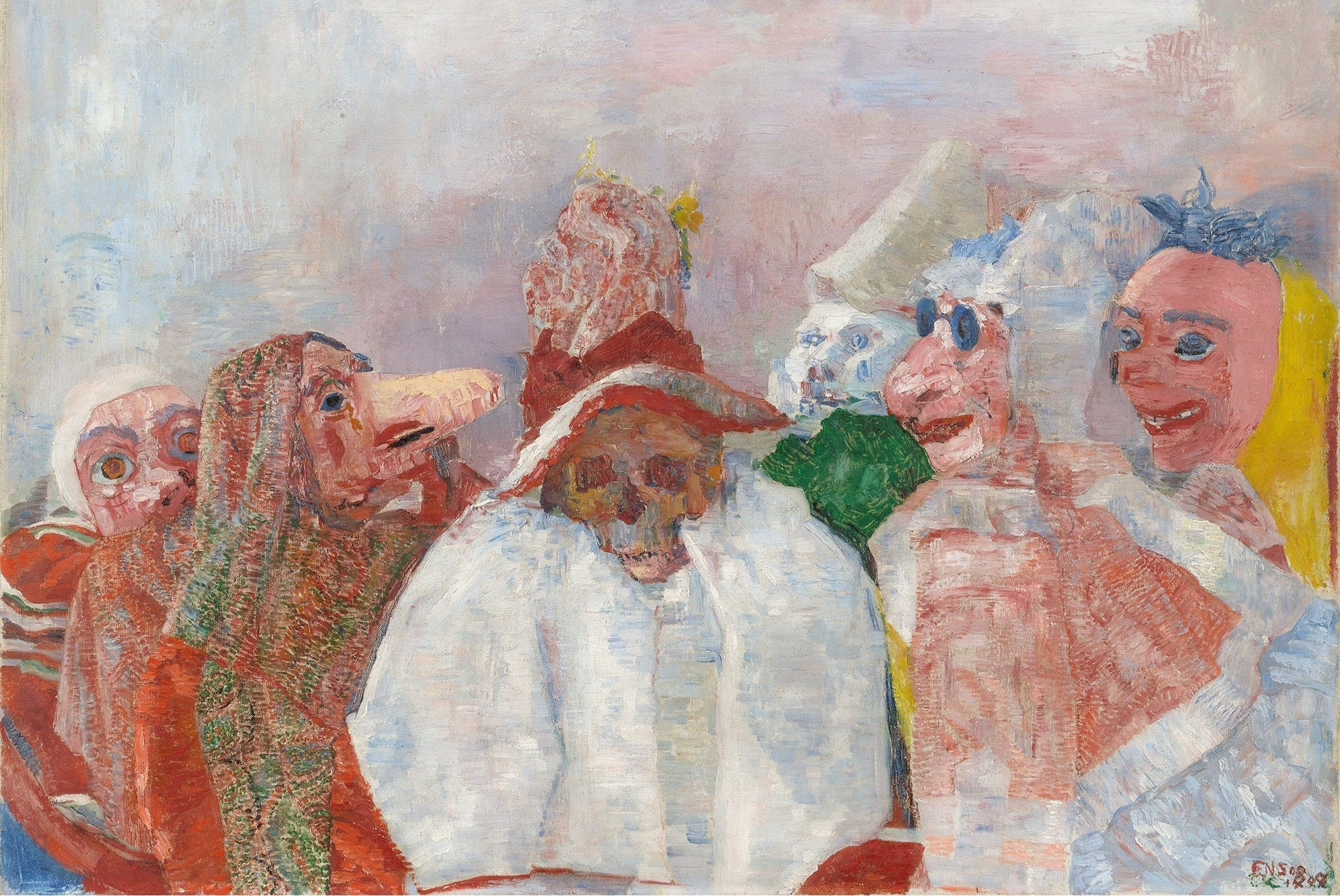
As if compelled by unseen forces—one imagines that scene in The Exorcist—my fellow traveller adjusts his AirPods, straightens his spine, and ‘locks in.’ Before him lies the cluttered still life of Productivity™: a crumpled FT, a bottle of protein-infused kefir, and two boiled eggs sweating inside their polypropylene coffin. For several moments, he sits with priestly solemnity. Then, as the train inches forward, so does he.
And so, begins his morning recital. I would call it theatre, but theatre requires even the slightest concession to its audience. There is no risk of such grace here.
“Jenny? You still there? Jenny? Excellent.”
He repeats her name as though invoking the supernatural. Dale Carnegie once advised this rigmarole; it’s meant to build something called rapport. Unfortunately, Dale Carnegie never sat captive before a disciple who had taken his gospels quite so literally.
“Jenny (build rapport), could you run those numbers by me again? (assert authority). I’m hoping to parallel-path with you moving forward (signal tribal membership). Great! (convey enthusiasm). Jenny, let’s circle back at 1400 GMT; I want to put a pin into an area of emerging awareness.”
By this point in the sermon, I’d developed several areas of emerging resentment and the unignorable desire to drive pins into eardrums—mostly mine. His monologue, which suggested he charged by the word, stretched unabated from Reading to London Paddington, where he skulked off the platform and into the neon vomit of the city like a Roman senator descending into the Suburra.
In the false refuge of a nearby pub, the missionaries gather and gab incessantly. Chirruping clots of earnest twenty-somethings discuss REM-centric sleep regimes, dopamine stacking, and some Santeria called ‘sunlight dosing.’ They sip protein-riddled IPAs. They recite “Huberman says…” as the devout once invoked St Augustine.
These rituals—the 21st-century Lascaux cave paintings—serve one purpose: to peacock one’s devotion to a deity known as The Grind. Like all deities, The Grind demands a daily sacrifice for a distant, mostly hypothetical reward.
We have struggled to name this social pathology. Grind culture. Hustle culture. 996. No days off. Whatever it is, it is not working. In truth, it is the inbred relation of Performative Reading—Performative Working. This theatre drips with all the fripperies of work and none of the results. Much like a Hinge premium account, or indeed the British state.
Émile Durkheim described the malady of the infinite: limitless aspiration tempered by limited means. Merton called it strain theory. When the gap between our aspirations (a career, a mortgage, a life) and the structural means to achieve them (stagnant wages, runaway house prices) yawns too widely, the result is social chaos—or what Durkheim called anomie. The under-45s call this phenomenon life.
The trouble with chasing work and leisure is that you catch neither. The average young Brit is exhausted yet frantic, motivated yet always on. For Durkheim, this motion without movement was the prelude to social collapse.
Consider those viral morning routines that spring from the nether realms now and then. Is it just me, or do these enterprising grind-bros spend four hours each dawn doing everything but something useful? It is an elaborate cabaret of… nothing much at all.
And the plague of productivity has not, I’m sorry to report, increased productivity. On that spectral economic measure, we Brits wheeze like chain-smoking snails behind the Dutch, the French, the Germans and—of course—the Americans.
Wages, meanwhile, have remained in a medically induced coma since 2008. House prices, on the other hand, have long treated plausibility as optional. Once, the average home was three times the average salary. Today, it is eight. Should this continue, innovative London estate agents may soon offer a new service for the mortgage-atypical: virtual reality goggles.
Peruse the job ads. A publishing assistant now earns the kind of salary once associated with mercenary summer jobs and cautionary tales. The average graduate, saddled with debt and at least one HR-approved acronym, earns a sliver above the legal minimum.
The Germans get it. The Dutch get it. The French get it. The Americans understand little else: hard work demands reward. Anything else is sparkling masochism.
Here in Britain, we worship the grind, but not the commensurate wages that would make the grind worth grinding for.
So why maintain the pretence of productivity?
Because real, hold-it-in-your-hands success—money, property, stability—has become a luxury item. To compensate, we settle for metrics pervious to our efforts: steps tracked, sleep monitored, diet optimised. These provide the soothing illusion of progress.
Meanwhile, record numbers of young Brits have fled the country. Many have fled so frantically they have flocked—willingly—to that dystopian desert theme park known as Dubai.
I don’t begrudge them. Nor do I resent the curious public self-abasements of the true believers. Every age riots in its boutique vanities. But somewhere between the boiled eggs and the biohacking, we have surrendered the ability—the unproductive luxury—to sit, think, and be.
Leisure is not the enemy of work. It is its civilised enabler. Ask the disconcertingly productive French. Ask the knuckled-down Germans. Ask almost anybody.
But don’t ask the Brits—unless you catch them scuttling along Heathrow Terminal 3, en route to any country where things still at least pretend to make sense.

To paraphrase Churchill, never have so many worked so hard for so little. Or accomplished so little.
I entered a career (resource management) that was REAL. As in I dealt with tangible things; logs on a truck, fish in a net, grass in a cow's belly. Even when I found myself in a position where I was involved in policy (horror of horrors!) at least I was trying to help the people still working on putting logs on that truck or grass in that cow's belly. I could not imagine the soul-destroying drudgery of working in, say, finance or insurance or some such that isn't related to anything actually real.
I learned a long time ago that people don't work primarily for money; they want to contribute to something they feel is important or meaningful. Building a house or, better yet, a skyscraper; a highway, a railroad. Providing people with real goods and essential services. They accept lower pay if they feel they're contributing. Now, we expect people to work for low pay for...what exactly? They don't even know. But we try to make it sound like it's relevant or real or meaningful. But deep down everyone knows it's not. And that is what makes them unhappy. Because if you're not doing something useful or meaningful you at least should make gobs of cash, right?
Right?
I really fear for my boys. Neither really knows what they want to do, youngest is highly academic and should (should) go to uni but I doubt it would make him happy. Unless he wants to do something requiring a degree I won't be pushing him in that direction. There's a real sense of malaise. I don't know what the answer is, but I don't think we've hit rock bottom yet. Unfortunately. Well, we've still got however many years of this labour government left haven't we?